
Huseyin Emanet
Huseyin Emanet
Rebuilding Ballpark’s brand and website for modern research teams
From an outdated marketing site with almost no inbound leads to a conversion focused, AI first experience trusted by leading brands.
Web Design, Brand Design
2024 - 2025
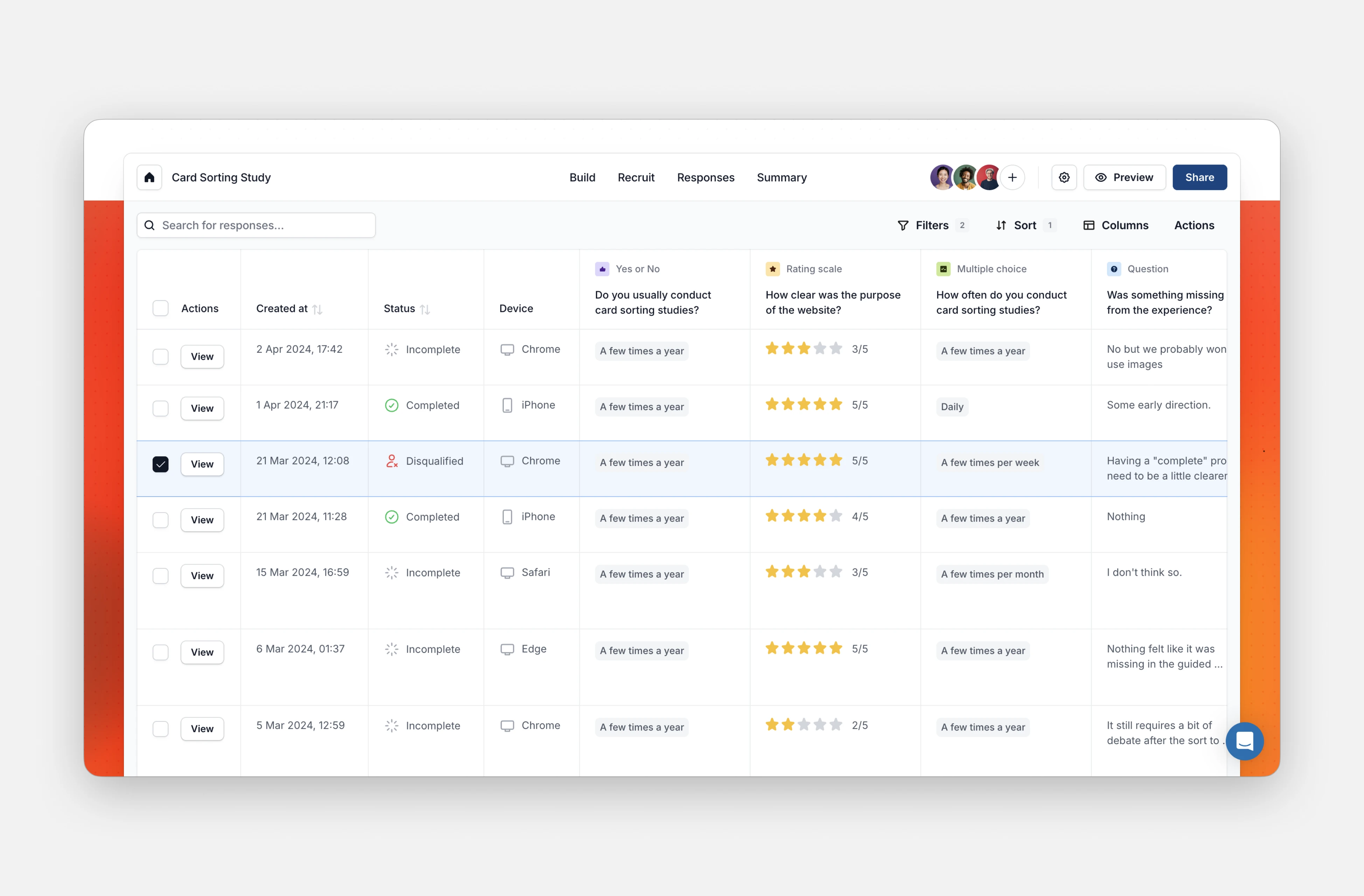
Card Sorting Study
Build
Recruit
Responses
Summary


Preview
Share
Search for responses…
Filters
2
Sort
1
Columns
Actions
Actions
Created at
Status
Device
Yes or No
Do you usually conduct card sorting studies?
Rating scale
How clear was the purpose of the website?
Multiple choice
How often do you conduct card sorting studies?
Question
Was something missing from the experience?
View
2 Apr 2024, 17:42
Incomplete
Chrome
A few times a year
3/5
A few times a year
View
1 Apr 2024, 21:17
Completed
iPhone
A few times a year
5/5
Daily
View
21 Mar 2024, 12:08
Disqualified
Chrome
A few times a year
5/5
A few times per week
View
21 Mar 2024, 11:28
Completed
iPhone
A few times a year
4/5
A few times a year
View
15 Mar 2024, 16:59
Incomplete
Safari
A few times a year
3/5
A few times per month
View
6 Mar 2024, 01:37
Incomplete
Edge
A few times a year
5/5
A few times a year
View
5 Mar 2024, 12:59
Incomplete
Chrome
A few times a year
2/5
A few times a year
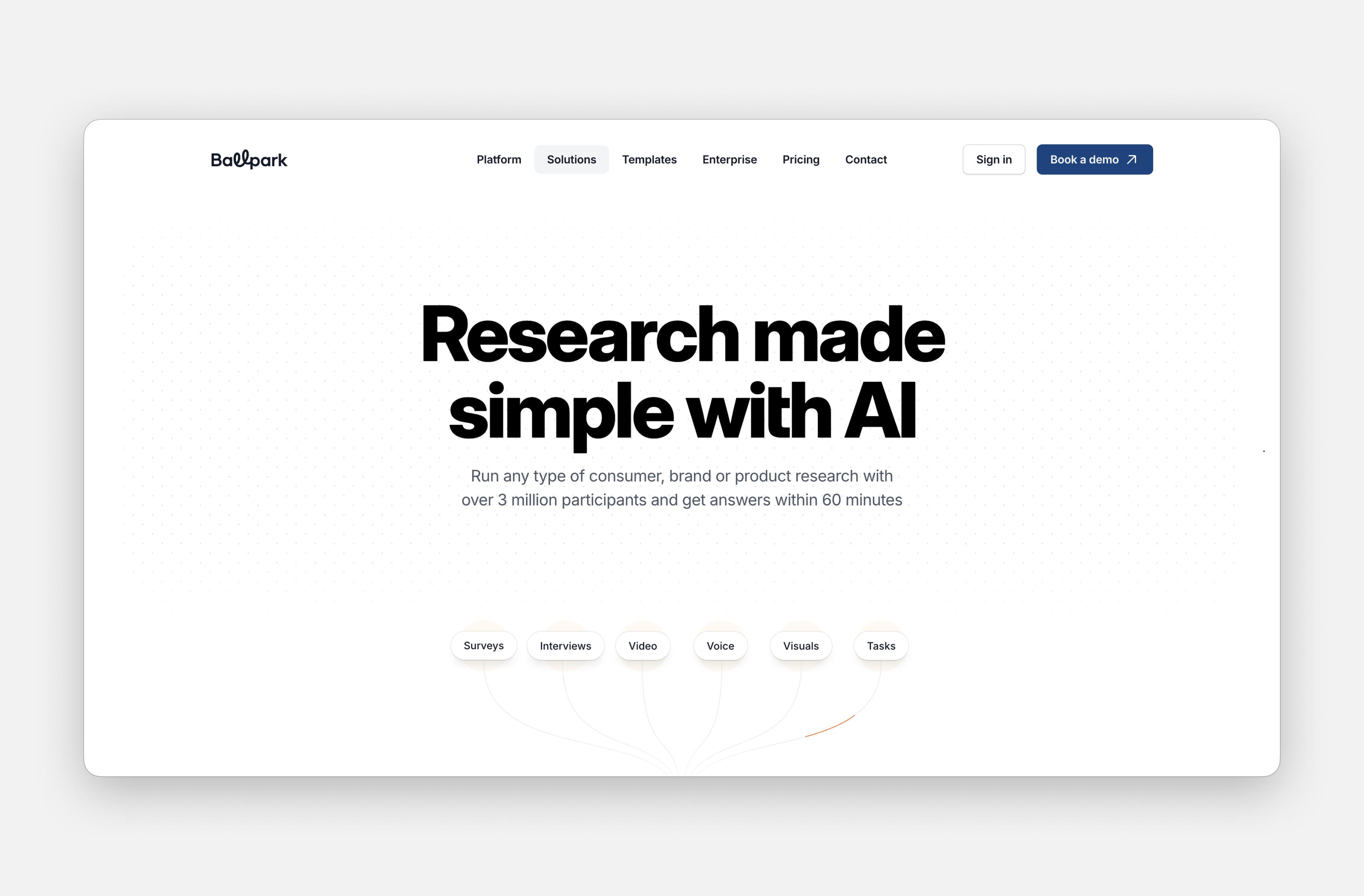
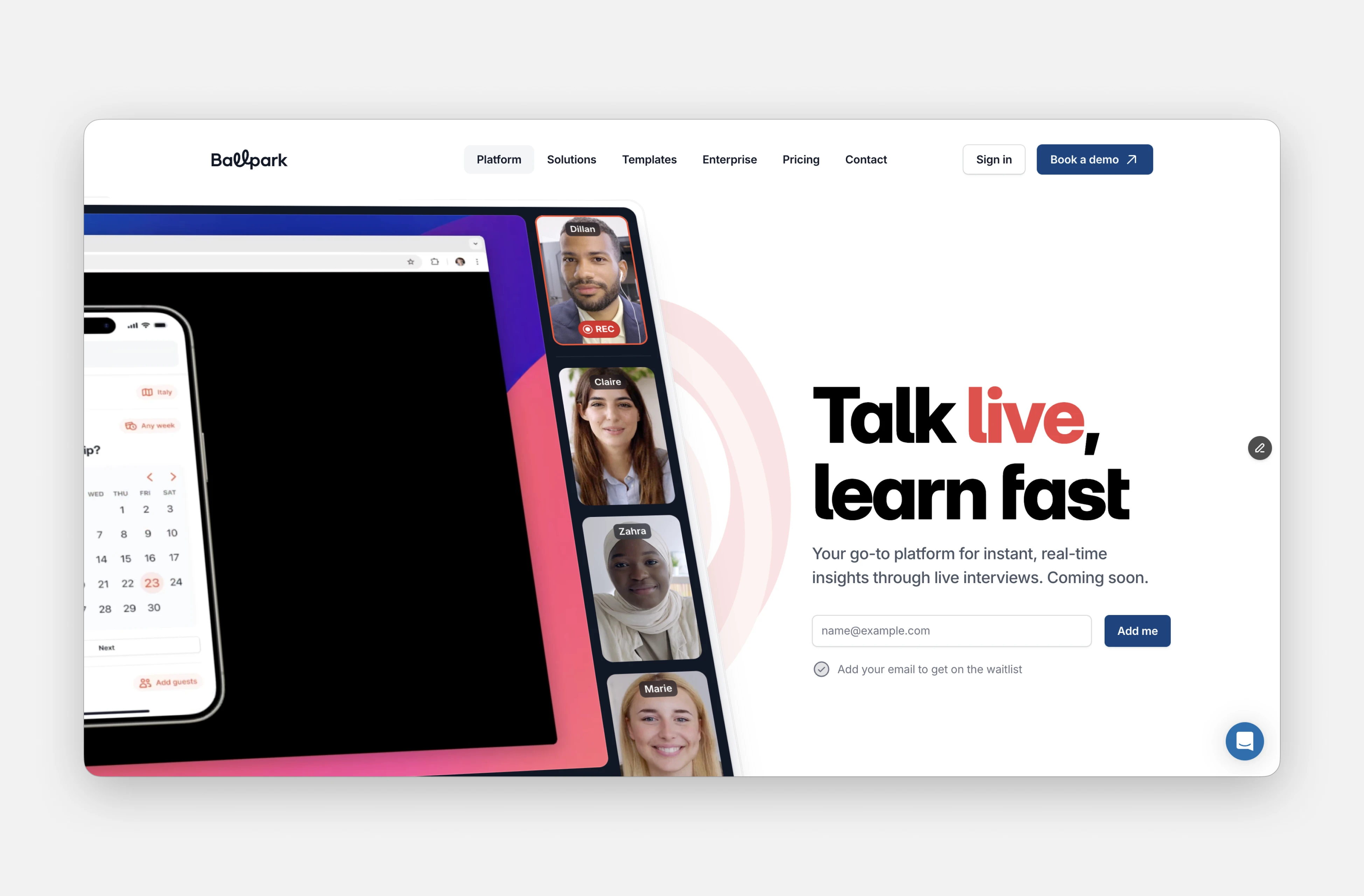
Homepage hero — explaining what Ballpark does in a single sentence.
When I joined Ballpark as Lead Brand and Web Designer, the product was strong but the website wasn’t. I took full ownership of rebuilding the brand and the entire web experience so it finally matched the product’s quality and communicated an AI-first, enterprise-ready story.
The Problem
Ballpark had a strong product, but the website wasn’t communicating its value. It created friction across three key areas:
1. Low trust & outdated visual language
The marketing site didn’t match the quality of the product UI, which caused hesitation among teams evaluating the tool.
2. Unclear storytelling
Visitors struggled to quickly understand what Ballpark does or how it fits into their workflow, leading to early drop-offs.
3. No scalable structure for growth
There was no foundation for role-based pages, solutions content, or landing pages, resulting in very few inbound demo requests.
These limitations were clear signs that the company needed a completely new marketing experience — which I took on as a full end-to-end design challenge.
Goals & Success Criteria
To support Ballpark’s growth and its AI-first strategy, I defined clear goals:
Communicate Ballpark’s value in under 5 seconds
A concise, structured message that immediately explains what Ballpark does and why it matters.
Increase trust for larger teams evaluating the product
A visual and narrative direction that matches the quality of the product UI.
Build a modular, scalable Framer system
Reusable components to accelerate new landing pages, experiments and campaigns.
Show the product, not just describe it
Interactive demos that help visitors experience Ballpark instantly.
Strengthen the brand across the site
A consistent, modern visual identity aligned with the product and its AI-powered features.
Make the website a real inbound channel
Improve clarity and engagement to increase demo requests.
Success meant designing a website that was clearer, faster to understand and more effective in supporting sales.
Research & Insights
To uncover the main friction points, I analysed multiple sources:
Customer and sales feedback
Consistent confusion around what Ballpark actually does and how fast it works.
Onboarding behaviour
Users understood the product only after interacting with it — not from the website.
Competitor positioning
Most tools in the space communicated value much faster and supported clearer use cases.
Product UI patterns
The product was visually strong and modern, but the website didn’t reflect this quality.
SEO & analytics data
Key pages had high drop-off rates, especially around the hero and early scroll.
Internal interviews
Founders and team leads confirmed that the existing site didn’t support sales or the AI-first narrative.
Key Insight
People loved the product once they used it, but the website took too long to explain its value.
This revealed a clear opportunity:
The new website needed to communicate Ballpark instantly and let visitors experience the product without friction.
Strategy
My strategy focused on solving the issues uncovered during research through three principles.
These principles guided every decision I made across the redesign, from brand direction to information architecture and final implementation.
1. Clarity first
I simplified the messaging hierarchy so visitors could understand Ballpark within seconds. This meant tighter copy, clearer structure and a more intentional flow across the homepage and solutions pages.
2. Show the product, don’t just describe it
Because users only understood Ballpark after interacting with it, I designed interactive demos and product-led moments that let people experience the tool immediately.
3. Build for scale
I created a modular Framer system made of reusable components. This allowed the team to launch new landing pages, experiments and campaigns in hours — not days — reducing design and engineering dependencies.
These principles guided every decision in the redesign, from the brand direction and content hierarchy to the layouts, interactions and final implementation.
The Solution (UI, UX, Brand, Info Architecture)
The redesign touched every part of the marketing experience. Each decision focused on improving clarity, trust and speed — both for visitors and for the internal team.
A modern, trustworthy brand system
I refreshed the visual identity with a cleaner, more confident look that aligned closely with the product UI. This established trust early and created a more unified experience across marketing and product.
Clear, audience-based information architecture
I reorganised the site around role-based Solutions pages (Product, Marketing, Insights). This helped visitors quickly understand where Ballpark fits into their workflow and reduced early confusion.
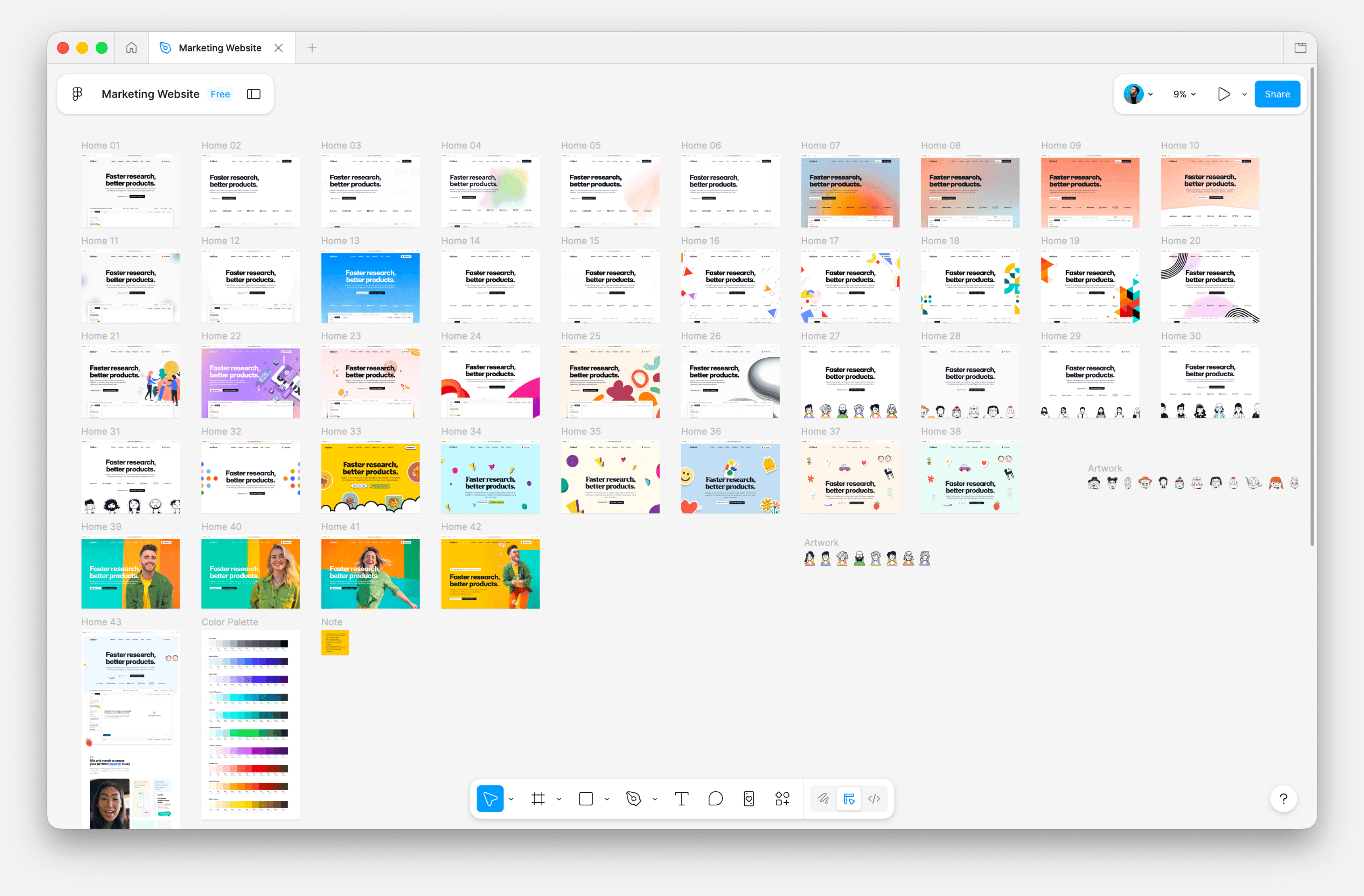
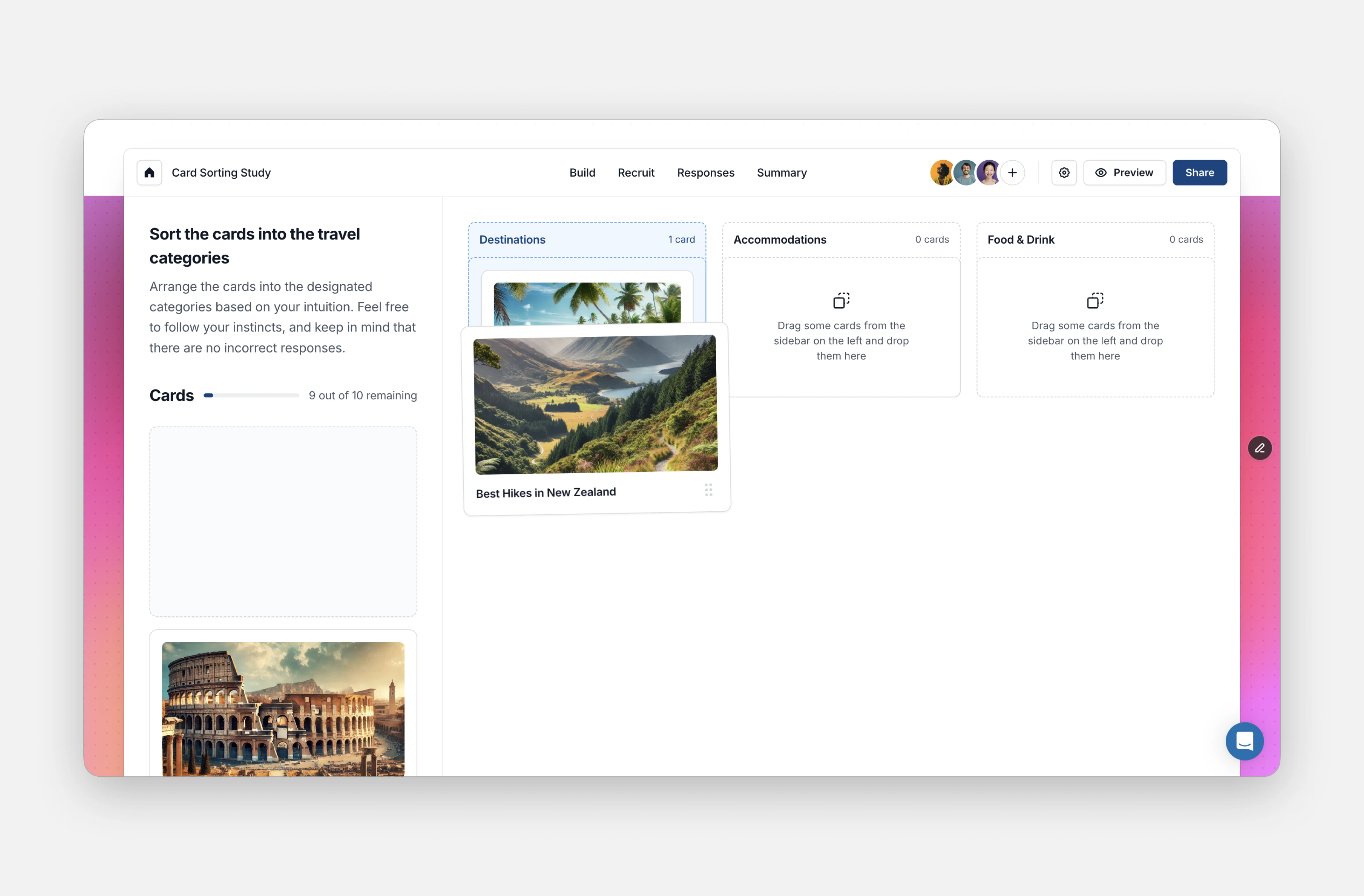
Interactive product demos
Instead of relying on static screenshots, I built functional Framer demos that let users experience the tool instantly. This closed the gap between “I don’t get it” and “this is exactly what we need.”
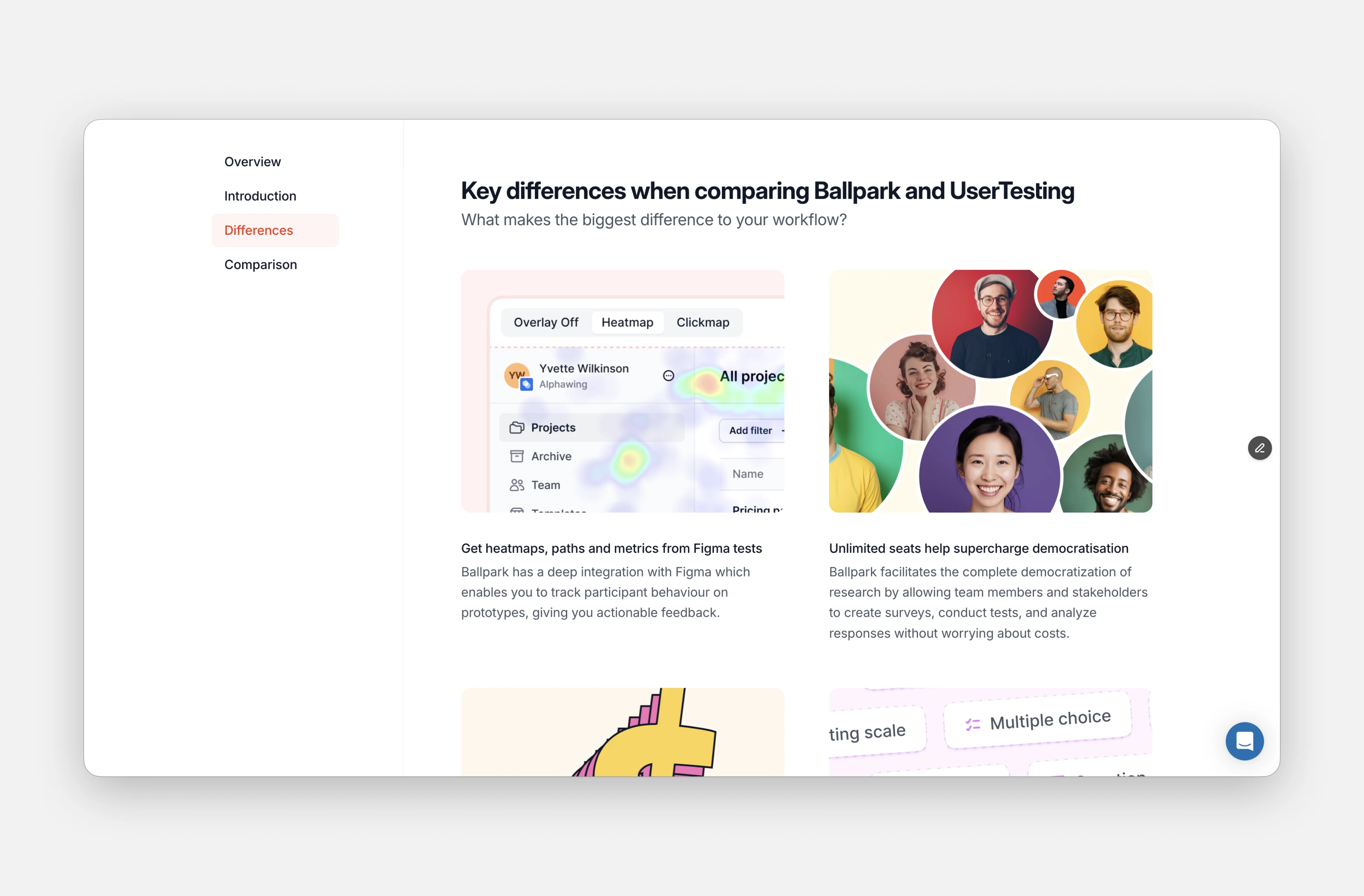
A modular Framer component library
I introduced a scalable system of reusable sections and layouts, enabling the team to build new landing pages, use-case pages and campaigns in hours rather than days — without heavy design involvement.
Enterprise-ready structure and content
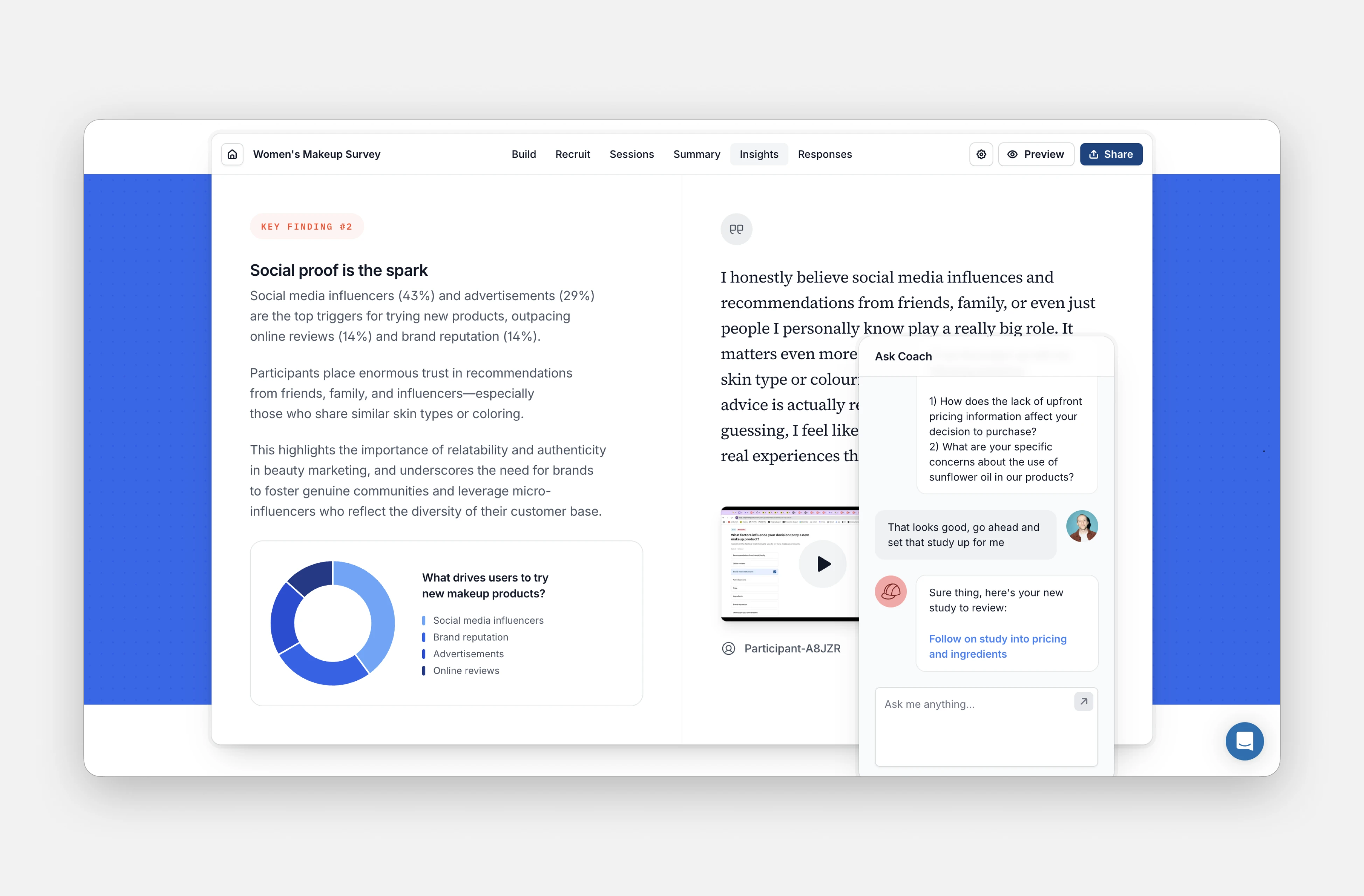
Stronger messaging, clearer proof points and structured landing pages helped position Ballpark as a serious AI-powered research platform, improving trust especially for larger teams.
Before / After
Before
Outdated visual language
No clear explanation of what Ballpark does
Low trust and almost no social proof
No structured landing page framework
Very few inbound demo requests
After
A cohesive, modern brand aligned with the product experience — fully redesigned by me
Clear, straightforward messaging that explains the value instantly
Interactive demos I designed and built to communicate the product’s strengths
A scalable Framer system I created and documented for use across the company
A noticeable increase in inbound demos and interest from companies like Shopify, Webflow and Sky
This transformation wasn’t just visual — it fundamentally improved how prospects understood the product and how fast the team could execute marketing work.
Impact
The redesign I led created clear improvements across both performance and internal workflow:
Stronger performance
Increased inbound demo requests (exact numbers confidential)
Larger companies such as Shopify, Webflow and Sky began evaluating the product
Early sales conversations became clearer, faster and more effective
Better perception & storytelling
A more trustworthy, enterprise-ready brand narrative
Improved clarity around what Ballpark does and how it fits into different workflows
Product-led demos helped prospects understand value instantly
Faster team execution
The modular component library I built enabled us to ship new pages 3× faster
The system dramatically reduced dependency on designers and engineers for routine pages
Clearer structure for future landing pages, product updates and campaigns
Overall, the redesign turned the website into a functioning growth channel — one that clearly communicates the product, supports sales and scales with the company.

Let’s create something meaningful together.
If you're looking for a designer who can combine brand, UX and technical execution to deliver measurable impact, I’d love to chat.